


Do No Harm: The Birth of Infection Prevention
Updated: Sep 5
Summary

For centuries, hospitals were places where patients often acquired deadly infections instead of recovering from illness. In this final installment of our Turning Points in Infectious Disease series, we trace the remarkable transformation that changed that reality. From Ignaz Semmelweis's controversial handwashing campaign in a Vienna maternity ward to Louis Pasteur's germ theory, Joseph Lister's antiseptic surgery, and Florence Nightingale's vision for cleaner, healthier hospitals, this episode explores how medicine learned one of its most important lessons: preventing infection diseases is more powerful than treating them. We also examine why healthcare-associated infections remain a challenge today and why the work of making hospitals safer is never truly finished.
Listen here or scroll down to read full episode.
Also available on all major podcast platforms
Full Episode
Citation List at the end of the post
Imagine you're about to have surgery.
You change into a hospital gown. A nurse checks your name one more time. Another cleans your skin with an antiseptic solution. The surgeon scrubs their hands. Sterile gloves. Sterile instruments. Sterile drapes. Everyone who enters the room is following carefully practiced routines designed to keep one thing away from you.
Microbes.
When you wake up, you'll probably never think about the clean instruments. The disinfected room. The gloves. The masks. The bottles of hand sanitizer mounted on nearly every wall. They're just part of what we know a hospital is.
But that wasn't always the case.
There was a time when walking into a hospital could be one of the most dangerous decisions you ever made. The cruel irony was that the very places built to heal people had become places where infections flourished. Until someone asked the question, what if the hospital itself was making people sick? The answer transformed medicine—and every hospital you've ever walked into.
This is Do No Harm: The Birth of Infection Prevention.
For most of human history, hospitals weren't places where people expected to get well.
The earliest hospitals, many established by religious communities during the Middle Ages, served an important purpose. They offered shelter, food, comfort, and care to people who had nowhere else to go. They cared for the poor, travelers, the elderly, and the sick. But they were not hospitals in the way we understand them today. Physicians were few, medical knowledge was limited, and there was little anyone could do beyond offering comfort and hope.
Even by the nineteenth century, when medicine had begun making important advances, hospitals still carried a frightening reputation. If you could afford it, you were often better off recovering at home, surrounded by family. Hospitals were crowded. Patients with many different illnesses shared the same wards. Ventilation was poor. Bedding and clothing were reused. Surgical instruments might be used on one patient after another with little more than a quick wipe between operations. Doctors moved from patient to patient with bare hands and blood-stained coats worn as badges of honor that signified experience.
By the mid-1800s, anesthesia had made many previously impossible operations

possible. Patients could then survive the operation only to develop raging infections in the days that followed. Wounds became swollen and foul-smelling. Fevers climbed. Pus collected beneath stitches. Bloodstream infections spread unchecked. What doctors called "hospital gangrene," "pyemia," or "childbed fever" claimed lives with terrifying regularity. And no one knew why these infections occurred, so they seemed almost inevitable.
Childbirth was a death trap
Most physicians of the time believed disease came from miasmas—the poisonous, foul-smelling air—or from imbalances within the humors, ideas we've talked about before. But physicians were working without one of the most fundamental ideas in all of medicine: germ theory didn't exist yet. The invisible world was still invisible.
In Vienna in the 1840s, the Vienna General Hospital was one of Europe's leading medical centers. Physicians came from across the continent to study there and they were facing one of medicine's most terrifying mysteries. Women were dying shortly after giving birth.
The disease was called childbed fever, or puerperal fever. A mother who had survived labor without complication would suddenly develop a high fever. Her abdomen became painfully swollen and tender. Infection spread rapidly through her body, and within days, many were dead.
I should clarify here that physicians in this era certainly recognized what we would call infection. They watched wounds become red and swollen, fill with pus, develop foul odors, and sometimes progress to overwhelming fever and death. What they didn't understand was where those infections came from. So when I say they saw infection, it's a statement about what they saw, not recognition that microbes had invaded and set up shop.
OK, so this trend in childbirth tragedy was so common that women feared the hospital almost as much as childbirth itself. But the hospital had two maternity clinics. They were in the same building, served similar patients and were separated by little more than a hallway. Yet year after year, one clinic had a mortality rate several times higher than the other. The difference became so well known that some women begged to be admitted to the safer clinic. Others pleaded to give birth in the street rather than be taken into the one with the higher death rate. Imagine knowing that giving birth on the sidewalk could actually improve your chances of surviving. And no one could explain why.
Some physicians blamed overcrowding. Others blamed poor ventilation. Some believed fear itself caused the illness. One physician even suggested changing the route of a priest who walked through the ward carrying the last rites because perhaps seeing him frightened patients into becoming sick. So yeah, that didn't work. Nothing worked.
His name was Inigo Ignaz Semmelweis
Then a young Hungarian physician named Ignaz Semmelweis noticed something everyone else had overlooked. The first maternity clinic—the one with the devastating death rate—was staffed by physicians and medical students. The second clinic was staffed primarily by midwives. That alone didn't explain the difference. But then tragedy struck closer to home. One of Semmelweis's colleagues, a pathologist named Jakob Kolletschka, was accidentally cut with a scalpel during an autopsy. Over the following days he developed fever, overwhelming infection, and died. When Semmelweis read the autopsy report, he was stunned. Kolletschka's disease looked remarkably similar to the disease killing mothers after childbirth. The pieces clicked into place for him.
Every morning, physicians and medical students performed autopsies on women who had died from childbed fever. Without thoroughly cleaning their hands, they then walked directly into the maternity ward to examine women in labor.
The midwives didn't perform autopsies. The doctors were carrying something from the dead to the living. Semmelweis couldn't see what it was. But he didn't need to know exactly what he was fighting to test his idea.
In 1847, he ordered everyone entering the maternity ward to wash their hands with a chlorinated lime solution before examining patients. The results were immediate. Mortality from childbed fever didn't fall gradually, it collapsed. Within months, deaths dropped from rates approaching one in every five mothers to around one or two out of a hundred—similar to the safer midwives' clinic.
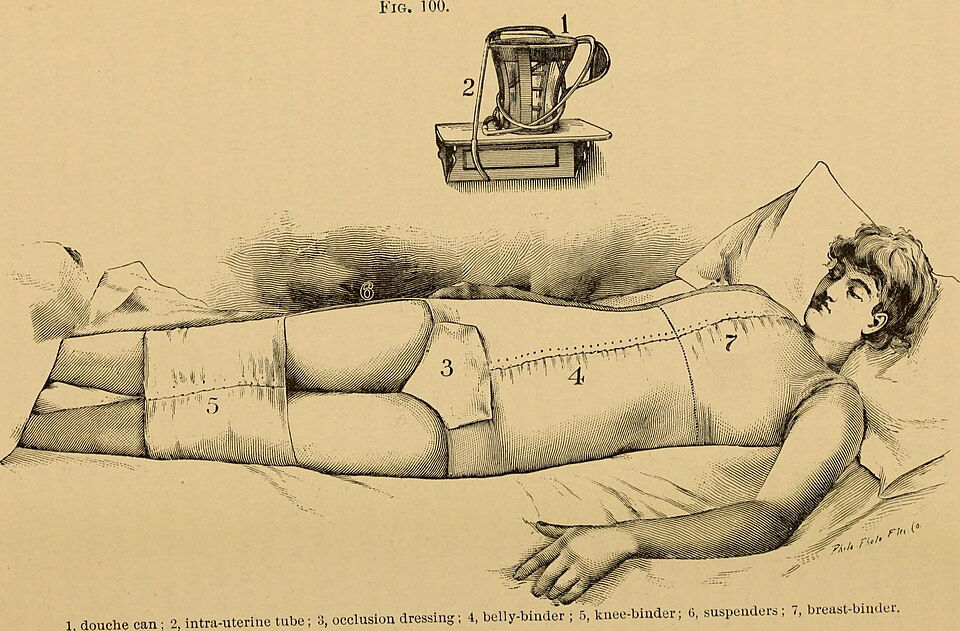
Semmelweis had uncovered one of the greatest breakthroughs in the history of infectious disease prevention. And almost no one believed him. And that's because he had evidence but he didn't have an explanation. He couldn't tell his colleagues what they were washing off their hands—other than calling it "cadaverous particles"—and to many physicians, the idea that they themselves were carrying disease from one patient to another wasn't just unlikely—it was deeply offensive. The suggestion that their own hands were killing patients challenged not only the medical understanding of the day, but also their professional identity.

Semmelweis became increasingly frustrated as his colleagues resisted the evidence. He argued passionately for handwashing, but without a scientific explanation, many dismissed his findings as coincidence or refused to change long-standing habits. He was considered confrontational and wouldn't engage in discourse with colleagues...I mean...you know...I get that...but tragically, he would never live to see his work fully recognized. Though he was recognized by the Royal College of Physicians in 1892, who installed an international monument in his honor in Budapest.
But science was beginning to change.
Enter Louis & Joe
In France, a chemist we talked about last week, Louis Pasteur, was asking different but related questions. He was trying to understand why wine soured, why beer spoiled, and why silkworms were dying from mysterious diseases. Again and again, he found the same answer: tiny living organisms that could only be seen under a microscope. For the first time, the invisible world had a face, so to speak.
And Microbes were everywhere. So if microbes caused infection...perhaps they could be stopped. That then raised the question, how do we keep microbes out? And with that, Louis Pasteur passed the torch to Joseph Lister, not literally ...Pasteur didn't hand off the research in some really cool science relay...wow that would be cool...but in essence...as Lister applied Pasteur's discoveries to figure out what doctors could do about the germs.

By the 1860s, surgery had entered a strange and frustrating era. Even after technically successful surgeries, patients frequently developed overwhelming infections. Wounds became inflamed and filled with pus. Fevers soared. Limbs were amputated to try to stop the spread, often without success. Entire hospital wards became known for the unmistakable smell of infected wounds.
And as strange as it sounds, many surgeons regarded the appearance of thick, creamy pus—what they called "laudable pus"—as a normal stage of healing. They certainly recognized that some indicators of what we know today to be infections, became dangerous, especially when patients developed high fevers or foul-smelling, rapidly spreading wounds. What they didn't yet understand was that even seemingly "healthy" pus usually reflected an infection already underway. And many surgeons accepted these infections as an unfortunate but unavoidable consequence of operating.
Lister wasn't convinced. He had been following Louis Pasteur's research and wondered whether the tiny organisms responsible for fermentation might also be responsible for wound infections. If microbes in the environment were contaminating surgical wounds, perhaps preventing that contamination could prevent infection. It was a radical idea.
So he began using carbolic acid—what we now call phenol—to disinfect surgical instruments, clean wounds, and even spray the air around the operating table. The methods seem cumbersome today, and some of them would later prove unnecessary, but the results were really something.
Postoperative deaths fell dramatically. Patients who would almost certainly have developed life-threatening infections survived. And now, for the first time, surgeons had evidence that infection could be prevented.
Lister's work spread across Europe and North America as surgeons gradually adopted antiseptic techniques, and over time those practices evolved into the sterile procedures—referred to as aseptic techniques—that we recognize today. Sterilized instruments replaced merely cleaned ones. Surgical gowns and gloves became standard. Operating rooms were designed to reduce contamination.
This was seriously revolutionary.
One interesting footnote is that rubber surgical gloves were first introduced in the late 1880s by the American surgeon William Halsted. Surprisingly, they weren't originally intended to protect patients—they were made to protect the hands of his surgical nurse, Caroline Hampton, who would later become his wife. Her skin had become severely irritated by the harsh disinfectants used in the operating room. Once adopted to protect hands...it didn't take long for surgeons to realize the gloves also reduced the spread of infection. Shout out to Joseph Bloodgood, one of the first surgeons to carefully document that wearing rubber gloves dramatically reduced postoperative infections. That last name though...for a surgeon pioneering infection prevention it's just too...well...good.
The Lady with the Lamp...and Stats
When we explored the history of military vaccination two weeks ago, we visited the Crimean War, where more soldiers were dying from infectious diseases than from battlefield wounds. We talked about Florence Nightingale's work at the military hospital in Scutari, where she used careful observation, sanitation, and meticulous recordkeeping to help improve survival. But her influence didn't end with the war.
Nightingale believed that the hospital itself could either contribute to disease or help prevent it and in many ways, she helped redefine what a hospital should be. She argued that clean water, proper sewage disposal, fresh air, good ventilation, adequate spacing between patients, cleanliness, nutrition, and careful nursing were matters of survival. She was also one of the first healthcare leaders to use actual data to drive change.
She meticulously collected information on deaths, illnesses, and hospital conditions. Her

now-famous statistical diagrams helped convince military and political leaders that sanitation not only improved morale, it saved lives.
Some of her explanations did reflect the scientific understanding of her era. Like, she believed fresh air helped because it dispersed harmful miasmas. But because she used data to guide her, even without knowing why they worked, many of the practical reforms she championed still reduced the spread of infectious diseases.
So, Semmelweis had shown that physicians could carry disease from one patient to another. Lister had shown that surgery could be transformed by preventing contamination with Pasteur's microbes. Nightingale demonstrated that an entire hospital could be designed to promote health instead of spreading disease. And by the end of the nineteenth century, hospitals were beginning to change.
Wards became cleaner and less crowded. Ventilation improved. Water and sewage systems were redesigned. Sterilization became increasingly routine. Nurses received formal training. Handwashing became more widely accepted. Operating rooms evolved into carefully controlled environments rather than ordinary rooms where surgery happened to take place. Walk into almost any modern hospital today, and you'll see the legacy of these pioneers everywhere. But not in statues or portraits, but in the ordinary routines that help keep people from getting infected.
One and Done? Not hardly.
We use sterile instruments, surgical teams follow carefully practiced checklists. We use isolation precautions for patients carrying highly resistant bacteria. Rooms are designed with specialized airflow to reduce the spread of airborne pathogens. Infection prevention specialists track healthcare-associated infections (HAIs), looking for patterns long before they become outbreaks.
But the work isn't finished. Despite this extraordinary progress, healthcare-associated infections remain a major challenge around the world. Patients still develop infections linked to surgery, urinary catheters, ventilators, and central lines. Antibiotic-resistant organisms such as MRSA, carbapenem-resistant Enterobacterales, and Clostridioides difficile continue to test hospitals every day.
But I'd like to emphasize here that that doesn't mean the revolution failed. It means that hospitals care for people who are extraordinarily vulnerable. They bring together serious illness, invasive procedures, weakened immune systems, and dangerous microbes under one roof. Infection prevention is not a one and done kind of thing. It must be practiced, measured, refined, and recommitted to every day.
The last few years have also reminded that scientific knowledge alone doesn't automatically become practice. Questions about hand hygiene, masks, ventilation, airborne transmission, and other infection prevention measures have sparked intense public discussion. Recommendations in some systems have evolved as evidence has grown and not so much in others. Some practices have been embraced quickly, while others have been debated or resisted.
That's a little bit par for the course, mixed with equal parts systems failures and misinformation mongers in powerful positions. Conveying accurate science and public health information is more critical now than ever.
Medicine continues to move forward by testing ideas, gathering evidence, refining recommendations, and sometimes challenging long-held assumptions. That's how Semmelweis, Pasteur, Lister, and Nightingale worked. It's how infection prevention continues to evolve.
Speaking of Lister...I'd like to recommend one of my favorite books on this period of medical history. It's called The Butchering Art by Lindsey Fitzharris. If today's episode left you wanting more, I think you'll really enjoy it. It's thoroughly researched but written for a general audience, and it tells Lister's story with all the drama, humanity, and scientific discovery that made it one of medicine's greatest turning points.
Wrapping it up
Through July's Turning Points series, we've explored some of the moments that forever changed our relationship with infectious diseases. We watched ranchers and scientists decide that instead of treating one screwworm infestation after another, they could eliminate the fly itself. We saw military leaders recognize that protecting soldiers before they became sick could save more lives and missions, than treating disease after it swept through a camp. We followed the remarkable journey from variolation to vaccination, when medicine's campaign to prevent one of history's deadliest diseases resulted in the triumph of eradication. And today, we've seen hospitals transformed from places where infections spread with frightening regularity into places intentionally designed to stop them.
These turning points all have something in common...they changed the question from "How do we treat infection?" to "How do we prevent it?". Which may actually be the most important turning point of all. It changed how we build hospitals. How we care for newborns, prepare for surgery, protect healthcare workers, vaccinate children, respond to outbreaks, and how we think about public health itself.
It all exists because generations of physicians, nurses, scientists, engineers, and public health leaders refused to accept that infection was inevitable. And because of that...
Millions of people are alive today who otherwise would not have been.
Don't let the really loud grifters, talk you into getting diseases that are preventable, so that they can cash in on the treatments. Prevention is not only safer and healthier, it's a whole lot cheaper.
Thank you for being here. If you enjoyed today's episode, I'd love it if you'd share it with someone who enjoys the stories behind science.
Next week, we're stepping into another Outbreak After Dark. The year is 1926, and somewhere behind an unmarked door, a jazz band is playing, glasses are clinking, and Prohibition is in full swing. But beneath the glamour of the speakeasy lies another story—one of contaminated alcohol, hidden poisons, and the unexpected ways infectious disease medicine found itself entangled with one of America's most famous social experiments.
Then, in August, we'll begin our final summer series, From Sunrise to Starlight, where we'll follow the hidden infectious disease stories that unfold over the course of a single summer day—from the first light of morning to the last porch light of the evening. And at the end of the month, we'll accept an invitation to an elegant Regency garden party for another Outbreak After Dark, where beneath the music, the flowers, and the polished manners of Bridgerton...infectious diseases shaped polite society.
Don't forget to sign up for my free weekly newsletter, Field Notes, where I continue the conversation on the episode, share things I’m paying attention to and outbreak updates, and peek behind-the-scenes. Until next week, stay healthy, stay informed, and spread knowledge, not diseases.
Annotated Citations
Accessing the literature: Whenever possible, I've linked directly to free full-text articles and books that are legally available online. For subscription-only journal articles, many researchers are happy to share a personal copy of their work if you contact the corresponding author. For books, I've included links to free online lending copies or library catalogs when available. If a title isn't freely available online, I've linked WorldCat to locate it at a nearby library or you can ask your local library about interlibrary loans.
Reis RA. 1959. Ignaz Semmelweis; the Story of Puerperal Infection. Q Bull Northwest Univ Med Sch.
A concise historical review of Ignaz Semmelweis's groundbreaking work linking physician hand hygiene to reductions in childbed fever. An excellent introduction to the events that launched the modern era of infection prevention.
🆓 Open access, PDF available at link: https://pmc.ncbi.nlm.nih.gov/articles/PMC3803707/
Semmelweis IP. 1861. Die Aetiologie, der Begriff und die Prophylaxis des Kindbettfiebers.
➡Semmelweis's own landmark book describing his observations, conclusions, and recommendations for preventing childbed fever. A remarkable primary historical source from one of medicine's most important turning points.
📖 Book Free to borrow at link with free account at the Internet Archive
https://archive.org/details/etiologyconcepta0000unse/page/n283/mode/2up
Pittet D, Boyce JM. 2001. Hand Hygiene and Patient Care: Pursuing the Semmelweis Legacy. Lancet Infectious Diseases.
➡ A modern review connecting Semmelweis's nineteenth-century discoveries to today's infection prevention practices, highlighting why hand hygiene remains one of the most effective—and challenging—tools in healthcare.
🔒Subscription required but you can request a copy from the author on ResearchGate here (scroll down): https://www.researchgate.net/publication/222064569_Hand_hygiene_and_patient_care_Pursuing_the_Semmelweis_legacy
Karamanou M, et al. 2012. From Miasmas to Germs: A Historical Approach to Theories of Infectious Disease Transmission. Infez Med.
➡ Explores how scientific thinking evolved from the miasma theory of disease to germ theory, providing valuable historical context for understanding why Semmelweis's ideas were initially rejected.
🆓 Open access, PDF available at link:
https://www.infezmed.it/index.php/article?Anno=2012&numero=1&ArticoloDaVisualizzare=Vol_20_1_2012_58
Cavaillon JM and Legout S. 2022. Louis Pasteur: Between Myth and Reality. Biomolecules.
➡ A thoughtful modern examination of Louis Pasteur's scientific contributions and the development of germ theory, separating historical fact from legend while explaining why his work transformed medicine.
🆓 Open access: https://www.mdpi.com/2218-273X/12/4/596
Worboys M. 2013. Joseph Lister and the Performance of Antiseptic Surgery. Notes and Records of the Royal Society.
➡ An outstanding historical analysis of how Joseph Lister developed antiseptic surgery and how his innovations reshaped surgical practice around the world.
🆓 Open access: https://royalsocietypublishing.org/rsnr/article/67/3/199/48464/Joseph-Lister-and-the-performance-of-antiseptic
Michaleas SN, et al. 2022. Joseph Lister (1827–1912): A Pioneer of Antiseptic Surgery. Cureus.
➡ A modern overview of Lister's life and work, explaining how Pasteur's discoveries inspired the development of antiseptic surgery and dramatically reduced postoperative infections.
🆓 Open access:
https://www.cureus.com/articles/130121-joseph-lister-1827-1912-a-pioneer-of-antiseptic-surgery#!/
Lathan SR. 2010. Caroline Hampton Halsted: The First to Use Rubber Gloves in the Operating Room. Proceedings (Baylor University Medical Center).
➡ Tells the fascinating story of Caroline Hampton Halsted, whose severe skin irritation from surgical disinfectants led William Halsted to introduce rubber gloves into the operating room. What began as a way to protect a nurse's hands soon became one of the most important advances in surgical infection prevention.
🆓 Open access:
https://www.tandfonline.com/doi/abs/10.1080/08998280.2010.11928658
Bloodgood JC. 1899. Operations on 459 Cases of Hernia in the Johns Hopkins Hospital from June 1889 to January 1899. Johns Hopkins Hospital Bulletin. 1899.
➡ One of the earliest reports demonstrating that routine use of rubber surgical gloves dramatically reduced postoperative wound infections. Bloodgood's careful observations helped establish gloves as a standard component of modern aseptic surgery.
📚 WorldCat (find at a library near you):
Turkowski Y, Turkowski V. 2024. Florence Nightingale (1820–1910): The Founder of Modern Nursing. Cureus.
➡ Reviews Florence Nightingale's lasting influence on nursing, sanitation, hospital design, and the use of data to improve patient care—principles that remain central to infection prevention today.
🆓 Open access:
Birgand G, et al. 2022. Innovation for Infection Prevention and Control—Revisiting Pasteur's Vision. Lancet.
➡ Connects the historical foundations of infection prevention with modern challenges, including antimicrobial resistance, hospital design, environmental contamination, and emerging technologies.
🆓 Open access through pubmed: https://pmc.ncbi.nlm.nih.gov/articles/PMC9754656/
Magill SS, et al. 2018. Changes in Prevalence of Health Care–Associated Infections in U.S. Hospitals. New England Journal of Medicine.
➡ A landmark national study measuring healthcare-associated infections in U.S. hospitals and demonstrating both the progress made and the work that remains to improve patient safety.
🆓 Open access:
Gilbert JA and Stephens B. 2018. Microbiology of the Built Environment. Nature Reviews Microbiology.
➡ Explores how microorganisms interact with the spaces we build, including hospitals, and how architecture, ventilation, and environmental design influence microbial communities and human health.
🔒Subscription required for publisher's version. A free PDF is available from the authors' research group's website. Although the built-envi.com homepage currently displays a PHP error, the PDF remains accessible and is listed on the group's publications page. The following link starts an automatic download of the PDF:
Dancer SJ. 2014. Controlling Hospital-Acquired Infection: Focus on the Role of the Environment and New Technologies for Decontamination. Clinical Microbiology Reviews.
➡A comprehensive review of how hospital surfaces, cleaning practices, and environmental decontamination contribute to reducing healthcare-associated infections, emphasizing that infection prevention extends well beyond hand hygiene.
🆓 Open access:
Fitzharris L. 2017. The Butchering Art: Joseph Lister's Quest to Transform the Grisly World of Victorian Medicine. Farrar, Straus and Giroux.
➡ An engaging and meticulously researched narrative history of Joseph Lister and the transformation of Victorian surgery. Recommended for listeners who would like to explore the remarkable story behind antiseptic surgery in greater depth.
📚 WorldCat (find at a library near you):


Comments