Field Notes #18: Trace Evidence
- Heather McSharry, PhD

- 10 minutes ago
- 9 min read


In the Margins
While working on this week's episode, I found myself wondering what might be left behind after the picnic itself is gone and all that's left is a patch of grass.
Could you tell—microbiologically—that a picnic happened there?
It turns out this isn't quite as ridiculous a question as it sounds.
We leave microbes behind almost everywhere we go. Our skin continuously sheds bacteria into the environment. We transfer some of our microbial communities to objects we touch. Researchers have even found that people can release distinctive mixtures of bacteria into the air around them—a kind of personal "microbial cloud." I mean...I'm pretty sure I've encountered some germ clouds in my life.
So our imaginary picnickers have been leaving biological traces since they arrived. The trouble begins when we try to figure out what those traces actually mean.
If we had the cups, utensils, phones, or cooler handle, we'd have better places to look. Researchers studying the forensic potential of the skin microbiome have found that people can have distinguishable microbial signatures and that some bacteria transfer from skin to touched objects. But that transfer can be limited, and microbial evidence isn't remotely equivalent to finding a fingerprint or a conventional DNA profile.
Our empty patch of grass would be harder still.
We could take samples from where people had been sitting and compare them with undisturbed areas nearby. If we found more human-associated microbes in one patch, that might be consistent with people having occupied it. But there isn't a validated microbial test that looks at a lawn and announces: Picnic.
Strangely enough, the soil might be better at telling the story in reverse.
Soil contains complex microbial communities that vary from place to place. Forensic researchers are investigating whether those communities can help associate soil carried on clothing, shoes, or other objects with the place it came from. In a recent study, researchers analyzing samples from different locations around Oslo could often distinguish their geographic origins from their bacterial communities, although accuracy declined as the samples became separated by seasons.
And then I started asking for more. Could we determine how many people had been there? Not reliably. Could we tell exactly when they were there? Not from a picnic site with anything approaching forensic confidence. Could we reconstruct the menu from the microbial community left in the grass?
No.
Microbes in the grass aren't going to reveal that four people ate chicken sandwiches, watermelon, and potato salad at 12:30.
Which is somehow my favorite part of this little investigation. The science gets us farther than I expected.
Just not all the way to lunch.
Underlined
If we treated our abandoned picnic like a microbial crime scene, here's what the evidence might—and might not—tell us.
The Picnickers
People continually shed microbes from their bodies and transfer some of them to their surroundings. Human-associated microbes at the site could potentially provide evidence that people had occupied the space, especially if samples could be compared with nearby undisturbed areas.
But an outdoor environment is complicated, and detecting human-associated microbes would not by itself prove that a picnic occurred.
The Things They Touched
This would be some of our better evidence—if everyone hadn't taken it home.
Skin-associated bacteria can transfer to touched objects, and researchers are investigating whether these microbial signatures might eventually help associate people with objects they've handled. The approach remains experimental, and transfer can be surprisingly limited.
Our cooler handle might have been much more informative than our grass.
The Ground
Soil has a microbial identity of its own.
Microbial communities differ between locations, and forensic researchers have successfully used those differences experimentally to classify soil by geographic origin. Soil stuck to a shoe or blanket might therefore help connect an object to a location.
Time and season complicate that comparison, however, because soil microbial communities change.
The Guest List
Could we count the picnickers from the microbes they left behind?
Not with current science.
Multiple people would contribute overlapping microbial material to an already complex outdoor environment, and there is no established method for turning that mixture into an accurate head count.
The Clock
Microbial communities change over time, and forensic scientists are studying whether predictable microbial changes can help answer certain timing questions.
But those approaches don't give us a reliable picnic clock. Sunlight, temperature, moisture, weather, the existing environmental microbiome, and countless other variables would influence what remained on our patch of grass.
We couldn't sample it and confidently say everyone left three hours ago.
The Menu
Here's where our investigation falls apart.
Physical food remains could obviously provide evidence of what was eaten. But the microbial signature of an outdoor picnic site cannot currently reconstruct a menu.
No chicken salad. No watermelon. No potato chips.
At least not unless somebody forgot to clean up.
So…could we arrive at an empty patch of grass and reconstruct yesterday’s picnic from its microbes? No. But we might find traces of the people who occupied it.
What It Points To
Microbial traces can be evidence, but don't tell the whole story.
Outbreak Watch
Updates include active outbreaks and emerging signals I'm keeping an eye on. Information is verified through official public health agencies and credible reporting.
As of mid-morning, August 12th, 2026:
Active Outbreaks
EBOLA (Bundibugyo, DRC and Uganda)
The Bundibugyo Ebola outbreak in the Democratic Republic of the Congo continues to expand. According to the DRC there have been 4449 confirmed cases and 2061 deaths, with transmission now active across 53 health zones in five provinces. That's two new health zones since last week. (Note: the sitrep link isn't working this morning so I linked the DRC's FB post above.)
Health officials increasingly acknowledge that the virus is still moving faster than the surveillance system. WHO has estimated that roughly 80% of new infections are being identified outside known transmission chains, meaning conventional contact tracing is finding many patients only after additional transmission has already occurred. Africa CDC is now shifting toward more aggressive active case finding, including door-to-door searches in affected communities.
There is also stronger evidence that the outbreak had a substantial head start. Genomic and epidemiologic analyses indicate that Bundibugyo virus was circulating for months before the outbreak was recognized in May. Early cases were missed or attributed to other illnesses, and diagnostic problems further delayed recognition of what was spreading.
The result is an outbreak response trying to catch a virus that was already geographically established before anyone knew what they were chasing.
What I'm watching now is whether intensified active case finding begins shrinking the proportion of cases appearing outside known transmission chains. Right now, that may be a more meaningful measure of progress than the cumulative case count itself.
What I'm watching now is whether the pace of geographic expansion begins to slow. Case counts will continue to rise as long as transmission remains active, but the number of affected health zones provides an important measure of whether the outbreak is becoming more geographically entrenched or beginning to stabilize.
The U.S. outbreak footprint remains relatively stable this week, but there is a meaningful new geographic signal immediately south of the border.
Chihuahua, Mexico, has now reported 104 cumulative animal cases across 27 municipalities, up from roughly 91 cases across 25 municipalities only a few days earlier. Guachochi has now reported its first case, and sterile-fly releases are being increased in response. That's particularly important because Chihuahua borders both New Mexico and West Texas, making continued expansion there directly relevant to the risk of additional northward spread.
In the United States, cumulative detections have increased to 45—44 in Texas and one in New Mexico—as of August 10, while Texas remains at 15 affected counties. There are still no confirmed U.S. wild-fly detections, and federal surveillance has found no evidence of screwworm among more than 1,600 wild animals examined in high-risk Texas counties.
There's also a new wrinkle in the sterile-fly story I've been following.
A Congressional Research Service assessment published August 11 highlights not only the continuing need for greater sterile-fly production, but another potential limitation: the biological fitness of the flies themselves. Some researchers have questioned whether long-term laboratory rearing may have reduced the mating competitiveness of the current sterile strain. That's important because sterile insect technique depends on released males successfully competing with wild males for mates.
In other words, production numbers tell us how many flies we can release. They don't necessarily tell us how effective those flies will be once they're released.
What I'm watching now is therefore expanding beyond production capacity. Chihuahua's geographic spread remains an important near-term signal, but I'll also be watching for data on sterile-fly performance in the field. Getting enough sterile flies into the air matters. Making sure they're competitive enough to interrupt reproduction matters even more.
Cyclosporiasis (United States)
There may finally be some encouraging news from the country's exceptionally large Cyclospora outbreak.
Michigan has now reported 12,485 cases, up from 12,218 last week. But state health officials say many of the cases currently being added represent infections that occurred earlier and are only now making their way through the reporting system. Officials believe the outbreak peaked in July, and Michigan has lifted its earlier recommendation to avoid lettuce and salad greens.
That distinction tells us that rising cumulative case counts don't necessarily mean transmission is still accelerating.
The source investigation remains less satisfying. FDA's traceback investigation continues to link one multistate cluster to shredded iceberg lettuce supplied by Taylor Farms de Mexico, and the recall of iceberg lettuce sourced from central Mexico remains in effect. However, laboratory testing still has not produced a confirmed positive product sample for Cyclospora.
So we now have two different questions to watch: whether new infections are actually declining, and whether investigators can ever close the remaining evidentiary gap around the source.
What I'm watching now is illness-onset data rather than the cumulative case count. If recent onset dates continue declining while older cases work through the reporting backlog, we'll have much stronger evidence that this outbreak is finally receding.
The CDC’s national dashboard remains behind state reporting and I still recommend using your state health departments for infomation in your area.
Salmonella Javiana (United States) One more foodborne outbreak has joined the watchlist this week—and given this week's episode, I couldn't exactly leave it out.
CDC and FDA are investigating a multistate outbreak of Salmonella Javiana linked to fresh jalapeño peppers. There have been 345 cases with 36 hospitalizations across AL, AR, CA, CO, GA, IL, IN, KS, KY, LA, MI, MN, MO, MT, NC, ND, NE, OH, OK, SC, TN, TX, UT, VA, WA, WI, WY.
Traceback evidence points to jalapeños distributed by Coast Citrus Distributors, and recalls have now expanded beyond the fresh peppers to prepared products containing them, including products made by Taylor Fresh Foods. The Taylor Farms connection is notable because a separate investigation is already tracing the ongoing Cyclospora outbreak to iceberg lettuce supplied by Taylor Farms de Mexico. But these are two distinct outbreaks involving different pathogens and different implicated produce supply chains, so there's currently no evidence that the outbreaks share a contamination source. What I'm watching now is whether traceback identifies the original source of contamination and whether the expanding recalls capture the full distribution network of the implicated peppers.
Watching
Important long-term signals:
No major developments this week change what I'm watching for in these three:
Mpox (Clade I): Clade I remains established beyond its historic geographic range, and WHO continues to emphasize surveillance, laboratory capacity, genomic sequencing, and vaccination of people at risk. I'm watching where sustained transmission becomes established in new settings.
Oropouche virus: Geographic expansion beyond the Amazon Basin remains the key long-term signal. I'm particularly interested in evidence that transmission becomes established in areas where competent vectors are already present rather than appearing only through travel-associated cases.
H5 avian influenza: H5N1 clade 2.3.4.4b continues circulating globally across wild birds, poultry, and some mammals. My threshold hasn't changed: individual spillovers matter, but the biological signal that would change the risk assessment is sustained mammal-to-mammal transmission or viral adaptation that meaningfully improves transmission among mammals.
Postscript
Thank you for subscribing. 🫶
A little programming note before I go: Outbreak After Dark is making a small scheduling adjustment this month. Some unexpected scheduling conflicts mean Kate won’t be able to join me in August, so I’ll have a special co-host stepping in instead. And Bridgerton? That one can wait. I’ve been looking forward to that garden party for far too long to do it without Kate.
I’ll share more about August’s After Dark episode soon.
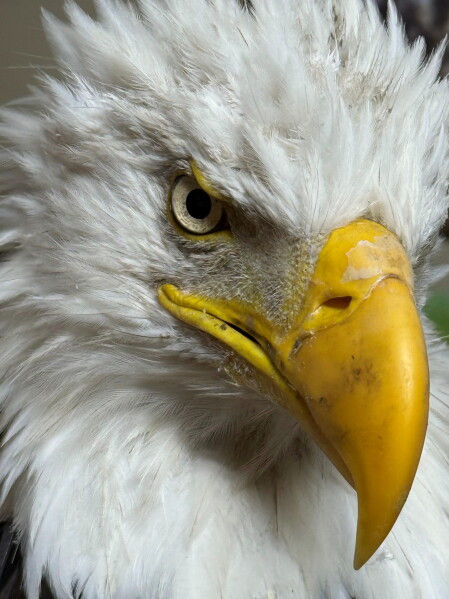
On a more personal note, I was very sad to hear that Jackie, the Big Bear bald eagle, died this week. I’ve been watching the Big Bear nest for years—through eggs and snowstorms, failed hatches and tiny eaglets, and all those long stretches when absolutely nothing happens and somehow you keep the camera on anyway.
There’s something strangely intimate about watching a wild animal’s life unfold that way. Jackie never knew any of us were watching, of course, but for years people all over the world knew when she laid an egg, worried when the weather turned bad, waited for pips, and checked in just to see her sitting in her familiar tree.
I was one of them.
She’ll be missed.
— Heather

Comments